How Often Should a Commercial Building Be Repainted?
You manage several buildings, and a few are starting to show their age. One has a faded south wall. Another has a scuffed lobby. A third has trim nobody has touched in years. Your owners want to know when the repaint is coming and what it will cost.
So how often should a commercial building be repainted? Search online and you’ll find answers from three years to ten. That range is too wide to budget from, and few sources explain why the numbers differ.
The timing matters. Repaint too early, and you spend money the building didn’t need yet. Repaint too late, and failed paint turns into damaged trim, drywall or masonry. Below, you’ll find the baseline cycles, what shifts them, the signs a building is due and how to plan ahead.
How Often Should a Commercial Building Be Repainted? The Baseline Cycles
Most commercial exteriors need repainting every 5 to 10 years. Interiors follow a separate clock set by traffic and use, not weather.
Here’s how a typical commercial building repaint cycle breaks down:
- Exterior wood trim and siding: These usually fall at the short end of the range, along with walls that face full sun.
- Exterior masonry and metal panels: These usually reach the long end when the last crew prepped and coated them properly.
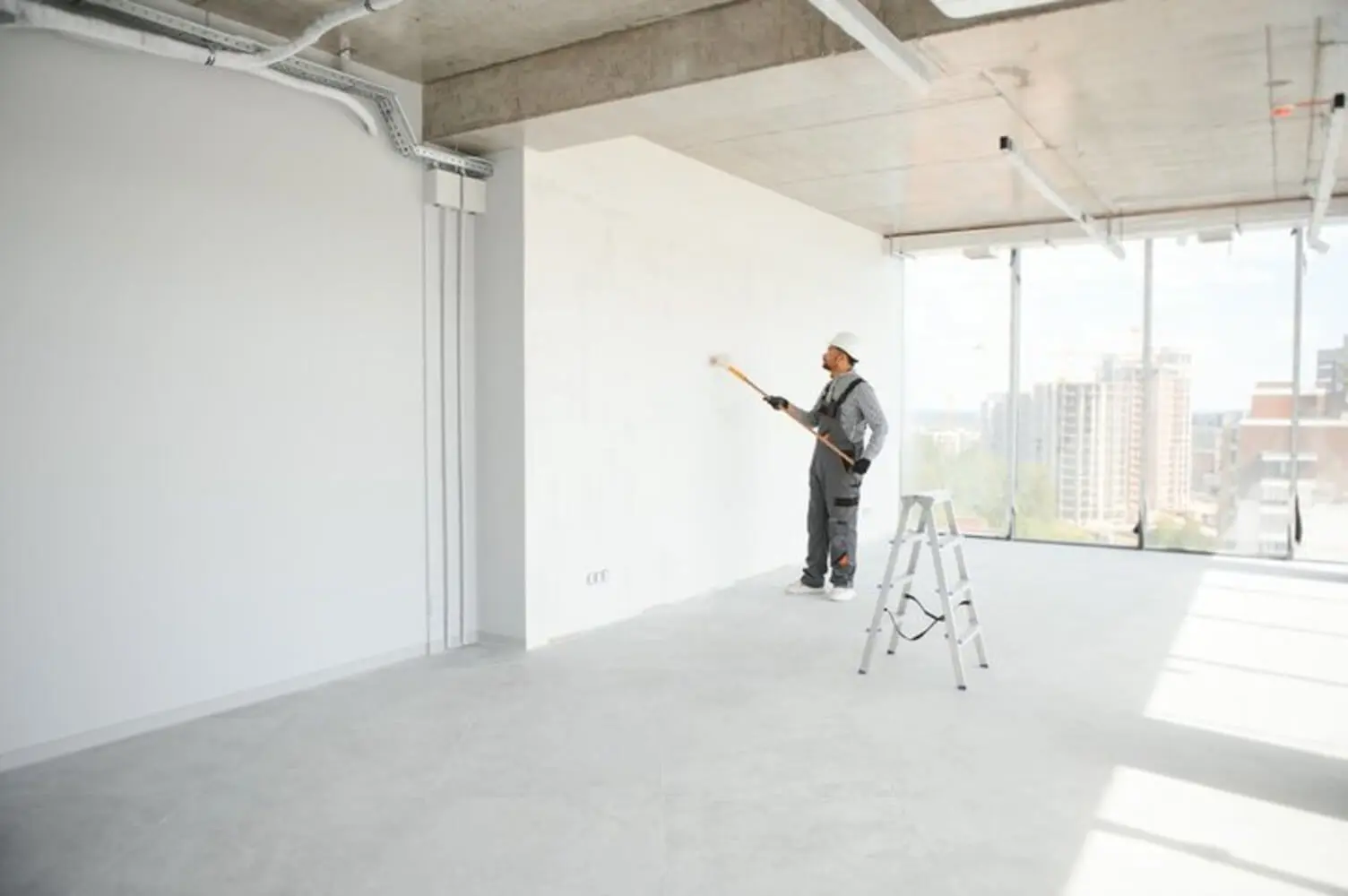
- High-traffic interiors: Lobbies, corridors and stairwells often need repainting every 3 to 5 years, with touch-ups in between.
- Low-traffic interiors: Private offices and back-of-house areas can often go 5 to 7 years or longer.
The two cycles run independently, so you don’t need to repaint inside and out at the same time. Tying them together usually means one job happens too early or the other too late.
Treat these ranges as planning benchmarks, not due dates. Online sources disagree because they skip the variables: surface, climate, traffic and the quality of the last job. Two buildings painted the same year can need their next repaint years apart.
Why Your Building May Run Ahead of or Behind the Baseline
Four factors decide where a building lands in its range. Most portfolios include buildings at both ends.
Exterior Surface and Building Type
How many years commercial exterior paint lasts depends first on what it covers:
- Wood trim, fascia and siding wear fastest. Wood swells and shrinks with moisture and pushes against the paint. Apartment breezeways, railings and trim often hit the short end first.
- Stucco and EIFS hold paint well but develop hairline cracks. Elastomeric coatings bridge small cracks and can stretch the cycle.
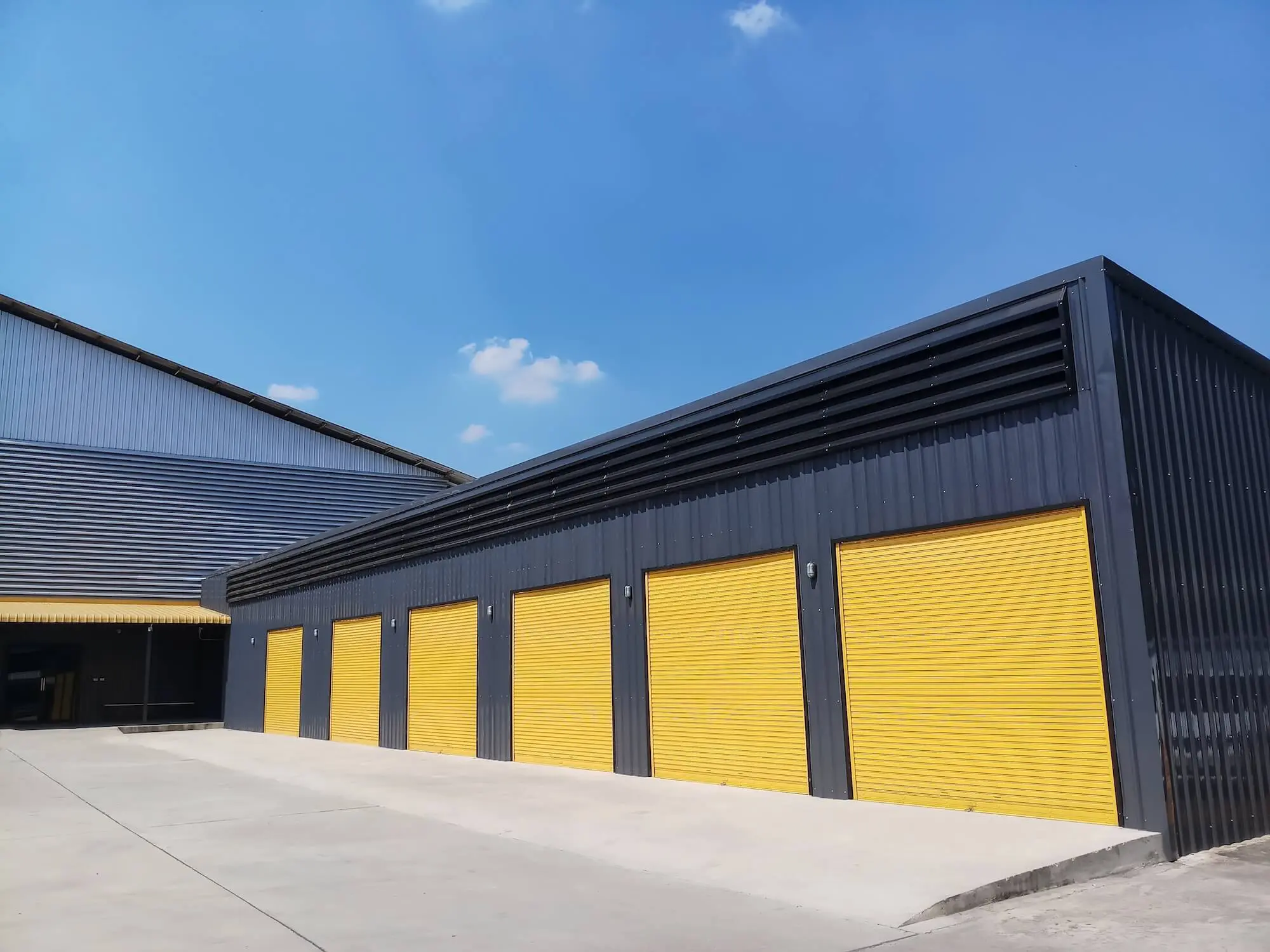
- Metal panels on warehouses and industrial buildings fade and chalk before they fail. Rust usually starts at fasteners, cut edges and scratches.
- Painted brick and block last a long time when the masonry is sound. Unpainted brick doesn’t need paint at all.
On buildings with mixed materials, the weakest surface sets the schedule.
How you use the building matters too. Retail centers take cart and vehicle damage near storefronts. Office parks in Blue Ash, Mason and Sharonville see less physical wear. Industrial buildings along the highway corridors collect road grime and exhaust that break coatings down faster.
South and west walls take the most sun and usually fade first. Repainting those sides ahead of the rest can spread commercial exterior painting across more than one budget year.
Freeze-Thaw Winters and Humid Summers in Cincinnati
Cincinnati’s climate works on exterior coatings in every season. That’s why repaint timing here depends on condition and prep more than the calendar.
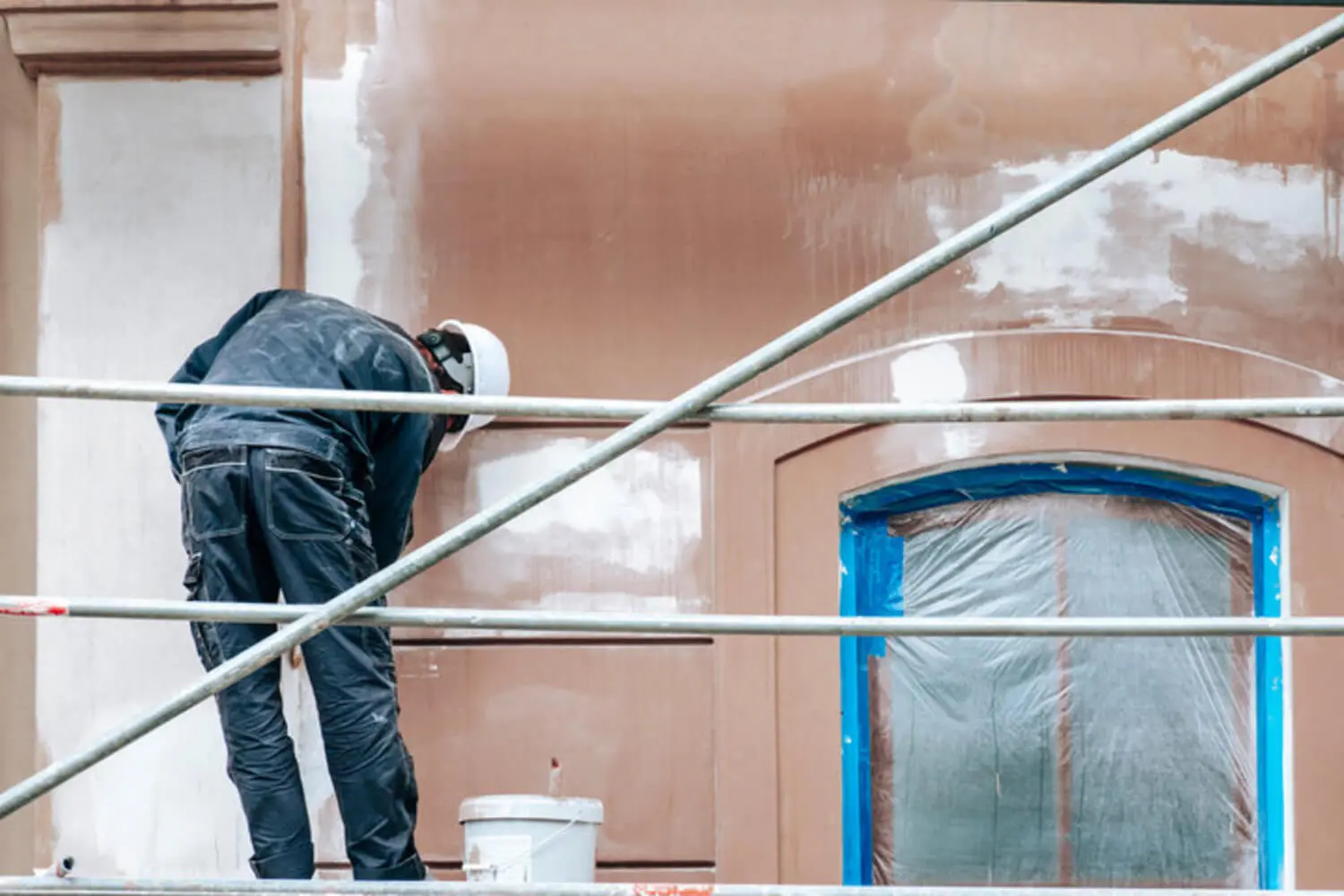
- Winter: Water seeps into cracked mortar, failed caulk and small breaks in the paint. It freezes, expands and widens the gap. Over time, moisture pushes the paint off from behind. Shaded and north-facing walls stay wet longer and often show this damage first.
- Summer: Heat and humidity speed up fading and chalking. They also feed mildew on shaded and north-facing walls.
Older brick buildings near the urban core show this most. Their mortar joints have survived decades of winters. Paint won’t hold over failing joints, so repairing failed mortar joints has to come first. Otherwise, the new coating fails early.
Weather also limits when crews can work. Coatings need the right temperature and moisture to cure. Planning around the best time to paint helps a repaint last its full cycle.
Interior Traffic and Tenant Turnover
Knowing when to repaint commercial interior walls comes down to contact, cleaning and turnover:
- Lobbies, corridors and stairwells take carts, deliveries and daily cleaning. Scuffs show here first.
- Offices and tenant suites last longer. A lease change is often the natural time to repaint.
- Apartment units get touched up or repainted at each move-out. Consistent turnover painting keeps units matching across the property.
- Medical buildings see constant cleaning that wears finishes down faster in patient areas. Worn walls there also undercut the clean impression patients expect.
- Warehouses can go longer, except near docks and forklift lanes.
Finish choice matters here too. Flat paint in a busy corridor marks up and can’t be scrubbed. Washable finishes in commercial interior painting stretch the cycle.
Prep and Coating Quality from the Last Repaint
The last repaint often decides the next one. Paint applied over dirty, chalky or glossy surfaces won’t bond well. It can start peeling within a few years, no matter how good the product was.
Good prep includes washing, scraping, repairing damaged trim or drywall, re-caulking joints and priming bare spots. Skip a step and the job loses years.
Coating choice matters just as much. A product rated for the surface and its exposure, applied at the right thickness, outlasts a bargain product or a single thin coat.
If you inherited a building with no paint records, treat its timeline as unknown. Its current condition will tell you more than its age.
Signs Your Building Is Due Regardless of Its Age
Condition tells you more than age. Watch for these exterior signs:
- Chalky residue that rubs off on your hand, which means the paint’s binder is breaking down
- Fading that differs from one side to another
- Cracking, blistering or peeling near joints, windows and rooflines
- Caulk that has split or pulled away
- Rust at fasteners, railings and doors
- Mildew on shaded walls
- Crumbling mortar or white mineral deposits on painted masonry
Inside, look for:
- Scuffs that no longer wash off
- Shiny spots where cleaning has worn the finish
- Patches that stand out from the wall
- Colors that make a space look dated to prospects
One sign on one wall usually calls for a spot repair. Several signs across a building usually mean it has reached the end of its cycle.
How to Plan Repaints Before Failure Raises the Cost
An on-time repaint is mostly cleaning, light prep and fresh coats. A late one adds full scraping, priming and repairs to rotted trim, damaged drywall or failed masonry. That extra work drives the price up.
Waiting also causes problems beyond paint. Water that gets past a failed coating can damage what’s underneath. A worn exterior or lobby can also cost you interest from prospective tenants.
Use these steps to stay ahead across your buildings:
- Walk each building once a year. Photograph its condition. Dated photos show out-of-state owners exactly what you see.
- Keep a log. Track each building’s last repaint date, products and condition notes. Share it with owners so repaint requests never come as a surprise.
- Rank by condition, not age. Put the buildings closest to failure first.
- Spread repaints across budget years. Avoid stacking several full repaints into one year.
Routine care stretches each cycle. Regular washing removes dirt and mildew before they break down the paint. Reseal split caulk quickly, and touch up damage before water gets in.
Once you know which buildings are due, budget comes next. Size, height, prep needs and access all shape your commercial painting cost.
Condition, Not the Calendar, Sets Your Next Repaint Date
The 5 to 10 year exterior range and shorter interior cycles give you a starting point. Each building’s surfaces, exposure, traffic and prep history decide where it actually falls. That’s the real answer to how often to repaint a commercial property in Cincinnati.
Here, a building that looks fine from the parking lot can be failing at its joints and trim. Catch it on time, and the job stays prep and paint. Wait, and repairs join the bill.
The clearest way to set a real date is to have one of our estimators look at your building in person. At Summit Commercial Contracting, we work only with commercial properties. We don’t take a deposit. A project manager walks the finished job with you before final payment, and we back our work with a 2-year warranty on labor and materials. Request a free on-site estimate today.